CYBERGIZER
.png)
Our Contribution
Our team engineered the sophisticated middleware and user-facing applications that turn "static buildings" into "interactive environments":
● Mobile-First Occupant App: We developed a high-performance mobile application that serves as the "remote control" for the building, allowing users to unlock doors, check air quality, and book amenities with a single tap.
● Unified Sensor Integration: We built a hardware-agnostic data layer that aggregates real-time streams from thousands of IoT sensors (CO2, temperature, humidity, and occupancy) without compromising system speed.
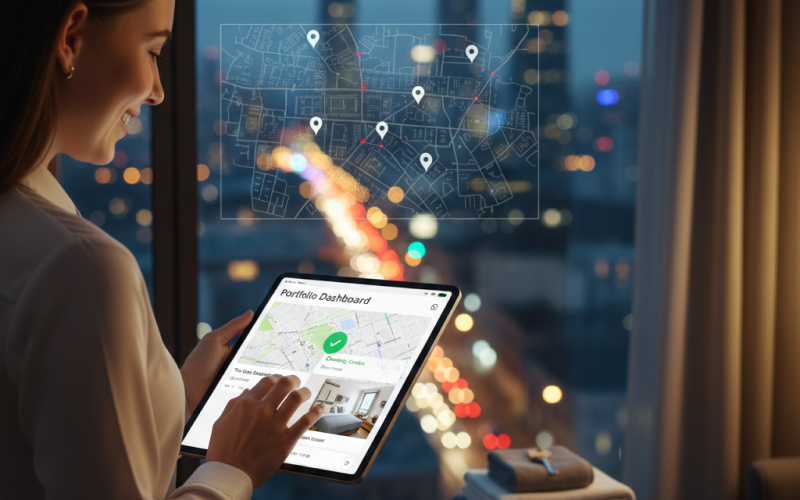
● Interactive Floor Mapping: We implemented a high-fidelity, interactive mapping system that provides real-time visual feedback on space availability, creating a seamless bridge between the physical and digital world.
Core Technologies
The architecture was built to handle massive data throughput while remaining agile and responsive:
● IoT & Protocols: Integration of LoRaWAN, Zigbee, and MQTT protocols for long-range, low-power sensor communication.
● Backend: A scalable Go (Golang) and Node.js microservices architecture designed to process millions of environmental data points daily.
● Frontend: A sophisticated React Native mobile framework for cross-platform excellence and Three.js for rendering 3D digital twins.
Cloud & Security: A secure Azure-based infrastructure with SOC2 compliance to ensure the absolute privacy of occupant movement and data.
Business Impact
The implementation of the Spaceti platform transformed properties into high-yield, high-efficiency assets:
● Energy Cost Optimization: By leveraging real-time occupancy data to automate HVAC and lighting, clients achieved up to a 25% reduction in energy consumption.
● Enhanced Occupant Wellbeing: Buildings reported a 40% improvement in indoor air quality satisfaction through transparent, real-time data sharing via the mobile app.
● Space Utilization Efficiency: Property managers identified underused areas and optimized floor plans, resulting in a 15-20% increase in effective space yield.
Premium Property Value: The integration of "Smart Building" tech allowed owners to command a premium on lease rates and property valuation by positioning the asset at the cutting edge of PropTech.